
Om Ali Recipe And History
Om Ali Recipe And History: The Royal Egyptian Dessert That Tells a Story
Few desserts capture the soul of Egypt quite like Om Ali. Rich, comforting, and steeped in legend, this beloved sweet dish is far more than a simple bread pudding. It is a royal tale baked into layers of flaky pastry, warm milk, nuts, and fragrant spices. Whether served in a luxury Nile cruise dining room or prepared in a traditional Egyptian home during festive gatherings, Om Ali represents hospitality, celebration, and heritage in every spoonful.
Travelers exploring Cairo’s historic districts—from the grandeur of Citadel Of Salah El-Din to the spiritual serenity of Al Azhar Mosque—often discover that Egyptian cuisine is as memorable as its monuments. And among the many traditional dishes, Om Ali stands proudly at the center of dessert tables, especially during Ramadan, weddings, and family feasts.
This article explores the fascinating history behind Om Ali, the authentic recipe passed down through generations, and the cultural significance that continues to make it one of Egypt’s most iconic sweets. If you are planning a journey through Egypt, tasting Om Ali should be as essential as visiting the pyramids.
The Royal History Behind Om Ali
The story of Om Ali dates back to the 13th century during the Mamluk era. Legend says the dessert was created to celebrate the victory of Sultan Izz al-Din Aybak’s wife, known as Om Ali, after a dramatic royal power struggle. To mark her triumph, she ordered a celebratory dessert made from simple, available ingredients—bread, milk, sugar, and nuts—and distributed it among the people of Cairo.
Over time, this humble celebratory dish evolved into a refined delicacy. While walking along El Moez Street, one of Cairo’s oldest thoroughfares, you can almost imagine medieval kitchens preparing early versions of Om Ali for royal festivities.
The dessert’s name literally translates to Mother of Ali, preserving the memory of the woman behind its legendary origin. Today, it remains a symbol of abundance and joy across Egypt.
What Makes Om Ali Different from Other Bread Puddings?
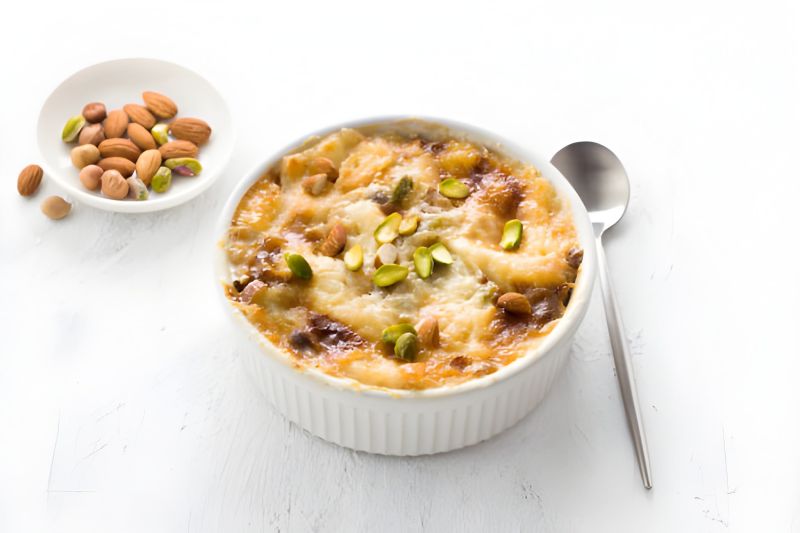
Although often compared to bread pudding, Om Ali has a distinct identity. Traditional recipes use flaky puff pastry or pieces of Egyptian baladi bread instead of standard sandwich bread. The pastry is layered generously with nuts, raisins, coconut flakes, and sometimes dried apricots, then soaked in sweetened hot milk and baked until golden and bubbling.
The result is a dessert that balances crisp textures with creamy richness. Unlike many Western puddings, Om Ali is typically served warm without heavy sauces, allowing the toasted nuts and caramelized milk to shine.
Authentic Om Ali Recipe: Step-by-Step Guide
Ingredients for Traditional Om Ali
To prepare authentic Om Ali at home, you will need puff pastry sheets (baked and broken into pieces), whole milk, heavy cream, granulated sugar, vanilla extract, mixed nuts such as almonds and pistachios, shredded coconut, and raisins. Some modern variations include condensed milk for added richness.
How to Prepare Om Ali
Start by baking the puff pastry until golden and crisp. Break it into bite-sized pieces and spread them evenly in a deep baking dish. Sprinkle a generous mixture of nuts, raisins, and coconut between layers.
Heat milk, cream, and sugar in a saucepan until steaming but not boiling. Add vanilla for fragrance. Pour the hot mixture over the pastry until fully soaked. Allow it to rest briefly so the pastry absorbs the liquid.
Bake in a preheated oven at 180°C (350°F) for about 20–25 minutes, or until the top turns golden brown. For an indulgent finish, broil for a few minutes to create a lightly caramelized crust.
Serving Suggestions
Serve Om Ali warm, straight from the oven. In luxury settings such as the Sonesta St. George Nile Cruise, chefs often elevate the presentation with premium pistachios and delicate cream swirls, offering guests a refined take on this classic comfort dessert.
Om Ali in Modern Egyptian Culture
Today, Om Ali is a staple at family gatherings and religious celebrations. During Christmas tours such as the 8 Days Egypt Christmas Holiday, travelers frequently enjoy festive Egyptian meals featuring this iconic dessert.
Families exploring Egypt together through curated programs like Egypt Family Tours often find that culinary experiences create some of their most treasured memories.
After a day discovering the treasures inside The Coptic Museum or admiring panoramic views from Cairo Tower, enjoying Om Ali in a local restaurant completes the cultural immersion.
Where to Taste the Best Om Ali in Egypt
Cairo’s historic quarters near Sultan Hassan Mosque offer traditional eateries serving authentic Om Ali prepared in clay dishes. Meanwhile, upscale hotels reinterpret the recipe with gourmet flair.
Travelers combining multiple destinations through Egypt and Dubai Tours often remark on how Egypt’s traditional desserts provide a warm contrast to modern city experiences.
If your itinerary includes Upper Egypt, explore culinary delights alongside heritage excursions with Aswan Day Tours & Excursions, where Nubian hospitality introduces visitors to regional variations of classic dishes.
Pairing Culinary Experiences with Egypt’s Iconic Tours
A day exploring ancient wonders on the Pyramids, Memphis and Saqqara Tour becomes even more memorable when followed by a traditional Egyptian dinner featuring Om Ali.
Families seeking immersive travel often choose the 10 Days Egypt Family Tour Holidays, combining cultural exploration with authentic dining experiences that introduce children to Egypt’s culinary heritage.
Why Om Ali Remains Egypt’s Ultimate Comfort Dessert
Om Ali endures because it tells a story. It connects modern Egypt with its medieval past, bridges royal courts and humble kitchens, and transforms simple ingredients into something extraordinary. The aroma of baked milk and toasted nuts evokes warmth, generosity, and celebration.
In a country known for monumental architecture and timeless landscapes, Om Ali offers a different kind of monument—one built from flavor, tradition, and shared experience.
Frequently Asked Questions About Om Ali Recipe And History
What is the origin of Om Ali?
Om Ali originated in 13th-century Egypt during the Mamluk period. According to legend, it was created to celebrate a royal victory and was distributed among the public as a symbol of triumph and generosity.
What are the main ingredients in traditional Om Ali?
The classic recipe includes baked puff pastry or bread, whole milk, cream, sugar, mixed nuts, raisins, coconut, and vanilla. Some variations add condensed milk or different dried fruits for extra richness.
Is Om Ali served hot or cold?
Om Ali is traditionally served warm, straight from the oven. The warm temperature enhances its creamy texture and allows the flavors of toasted nuts and caramelized milk to fully develop.
How is Om Ali different from bread pudding?
While both are baked milk-based desserts, Om Ali uses flaky pastry instead of regular bread and does not typically include eggs. Its texture is lighter, with crisp golden layers and a rich, creamy interior.
Can I find Om Ali outside of Egypt?
Yes, Om Ali is popular throughout the Middle East and is sometimes served in Egyptian or Middle Eastern restaurants worldwide. However, tasting it in Egypt offers the most authentic and culturally immersive experience.
Is Om Ali suitable for special occasions?
Absolutely. Om Ali is commonly prepared for Ramadan, weddings, Christmas celebrations, and family gatherings. Its generous ingredients and comforting flavor make it a dessert associated with abundance and joy.


